

 français


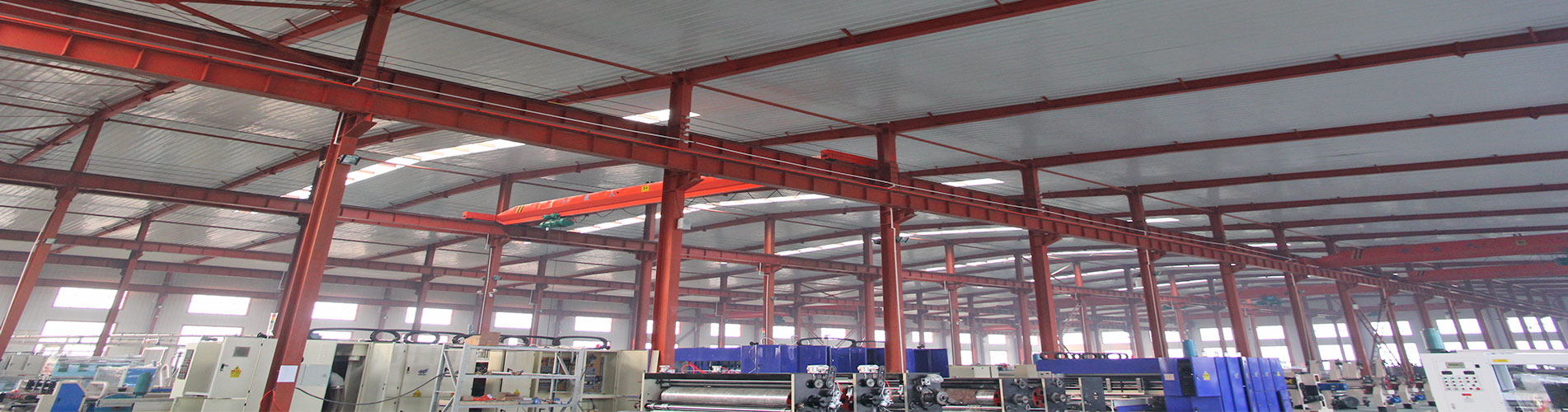

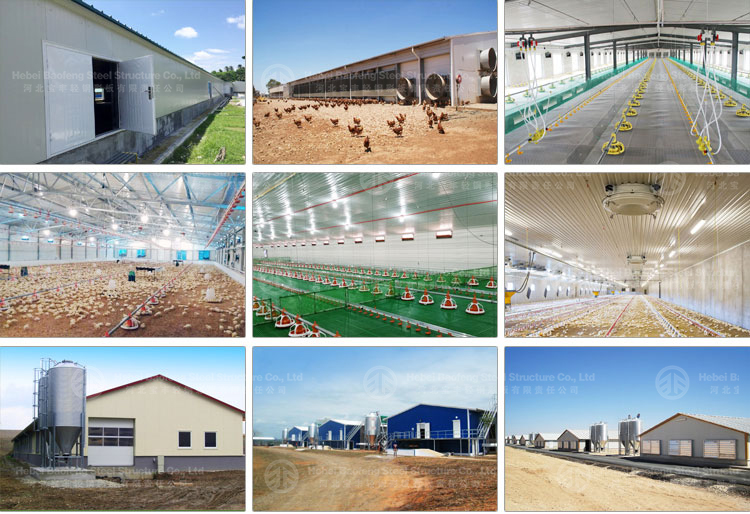
The characteristics of Steel structure Poultry House building
Steel structure poultry houses represent the modern standard for commercial and large-scale farming due to their durability, efficiency, and adaptability. Here’s a detailed breakdown of their key characteristics, divided into structural, functional, and economic aspects.
1. Structural & Construction Characteristics
High Strength & Large Spans: The primary frame (columns, rafters, trusses) is made of hot-dip galvanized steel, providing immense strength-to-weight ratio. This allows for wide, clear-span interiors (e.g., 12m to 30m+), completely free of obstructive columns. This maximizes usable space for cage systems, litter floors, or automated equipment layouts.
Fast Prefabricated Construction: Like other prefab steel buildings, components are engineered, cut, and fabricated off-site. This enables rapid on-site assembly, significantly reducing construction time (by ~30-50%) compared to traditional brick or wood structures. It's less dependent on weather during the main assembly phase.
Superior Durability & Longevity: Properly galvanized steel is highly resistant to:
Corrosion: Essential for withstanding the corrosive ammonia-rich atmosphere from poultry waste.
Pests: Impervious to termites, rodents, and birds that can damage wood structures.
Fire: Non-combustible, offering a major safety advantage.
Wind & Snow Loads: Designed to meet specific local codes for extreme weather events, protecting the valuable livestock inside.
2. Functional & Environmental Control Characteristics
Precision Environmental Management: This is the most critical functional advantage. The steel frame supports and integrates sophisticated systems for the "Controlled Environment House":
Ventilation Systems: Can robustly support heavy sidewall curtain systems, tunnel ventilation fans, and inlet baffles for precise temperature, humidity, and air quality control.
Insulation: Walls and roofs are easily clad with sandwich panels (EPS/PIR foam core) that provide excellent thermal insulation, reducing heating/cooling costs and stabilizing the internal climate.
Lighting Systems: The framework allows for easy, orderly installation of automated LED lighting programs to regulate bird growth and laying cycles.
Cleanability & Hygiene: Smooth, non-porous interior surfaces (when combined with proper wall cladding) allow for thorough washing, disinfecting, and "batching out" between flocks, which is crucial for biosecurity.
Adaptability & Expandability: The modular design makes it relatively straightforward to extend the length of a house for future expansion. The interior can be easily reconfigured for different poultry types (broilers, layers, breeders) or housing systems (cage-free, aviary, etc.).
3. Economic & Operational Characteristics
Long-Term Cost-Effectiveness: While the initial investment may be comparable or slightly higher than some traditional methods, the lower lifetime cost is key due to:
Minimal maintenance (no rotting, warping, or pest damage repairs).
Reduced utility bills from better insulation and efficient systems.
Higher durability leads to a longer usable lifespan.
Optimized for Automation: The strong, predictable structure is ideal for integrating automated feeding, watering, egg collection, and manure belt systems. This reduces labor costs and improves operational scale and consistency.
Improved Bird Performance & Welfare: A stable, precisely controlled environment (temperature, air quality, light) directly translates to better Feed Conversion Ratios (FCR) in broilers, higher egg production in layers, and lower mortality rates—directly impacting profitability.
Enhanced Biosecurity: The ability to seal the building effectively and control access (through designated entry points with sanitation) helps protect flocks from external disease threats.
Common Design Configurations:
Open-Sided with Curtains: Common in warmer climates, using automated sidewall curtains for natural and mechanical ventilation.
Fully Enclosed (Tunnel-Ventilated): The modern standard for precise climate control, using insulated panels, inlet systems, and exhaust fans.
Post-Frame Hybrid: Sometimes uses a combination of wooden posts with steel trusses, but pure steel is becoming dominant for its consistency and durability.
Potential Considerations:
Upfront Capital: Requires significant initial investment, though financing is common.
Technical Knowledge: Requires proper design by agricultural engineers to ensure ventilation, insulation, and system integration are optimized for the local climate and poultry type.
Condensation Management: Requires careful design of vapor barriers and ventilation to prevent moisture condensation on cold steel members, which can lead to wet litter and health issues.
Conclusion:
A steel structure poultry house is not just a shed; it's a highly engineered production facility for livestock. Its characteristics—strength, durability, environmental precision, and integration with automation—make it the overwhelming choice for modern, profitable, and welfare-focused poultry production. It transforms poultry farming from a weather-dependent endeavor into a controlled, efficient, and scalable industrial operation.
Catégories
dernier blog
Mots clés


Pour Demandes de renseignements sur nos produits ou Pricelist, laissez-nous s'il vous plaît et nous serons en contact dans les 24 heures.
© droits dauteur: 2026 Hebei Baofeng Steel Structure CO.,LTD Tous les droits sont réservés.

IPv6 réseau pris en charge


 +8615720226351